

Understand the mechanism. Then make the decision.
CoreRounds teaches the USMLE as one connected line of reasoning: the physiology you learn for Step 1 becomes the clinical decision you make for Step 2 CK.
The idea
One idea, two examinations.
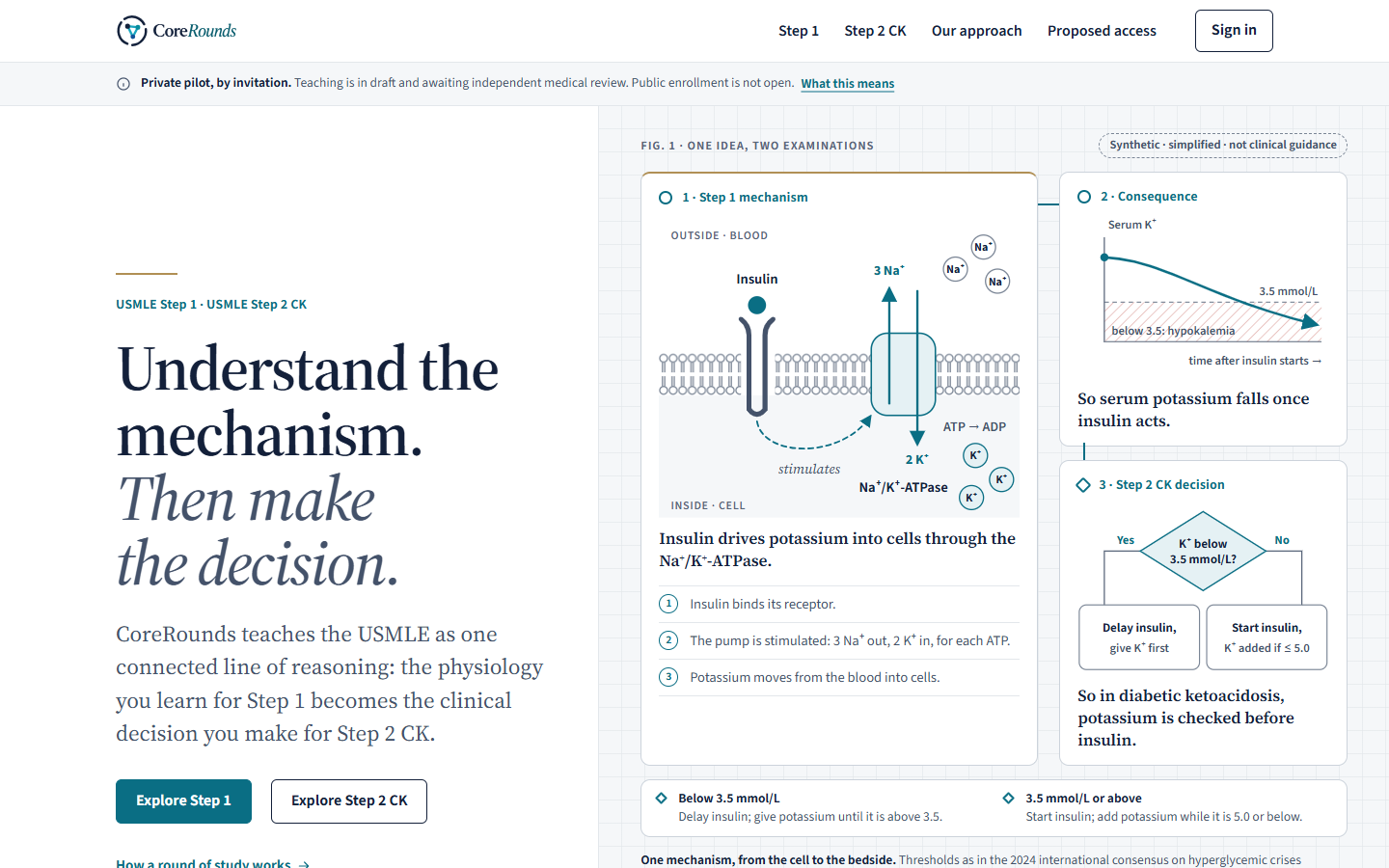
Step 1 rewards understanding mechanisms; Step 2 CK rewards clinical decisions. Most students prepare for them with separate resources and lose the thread between the two.
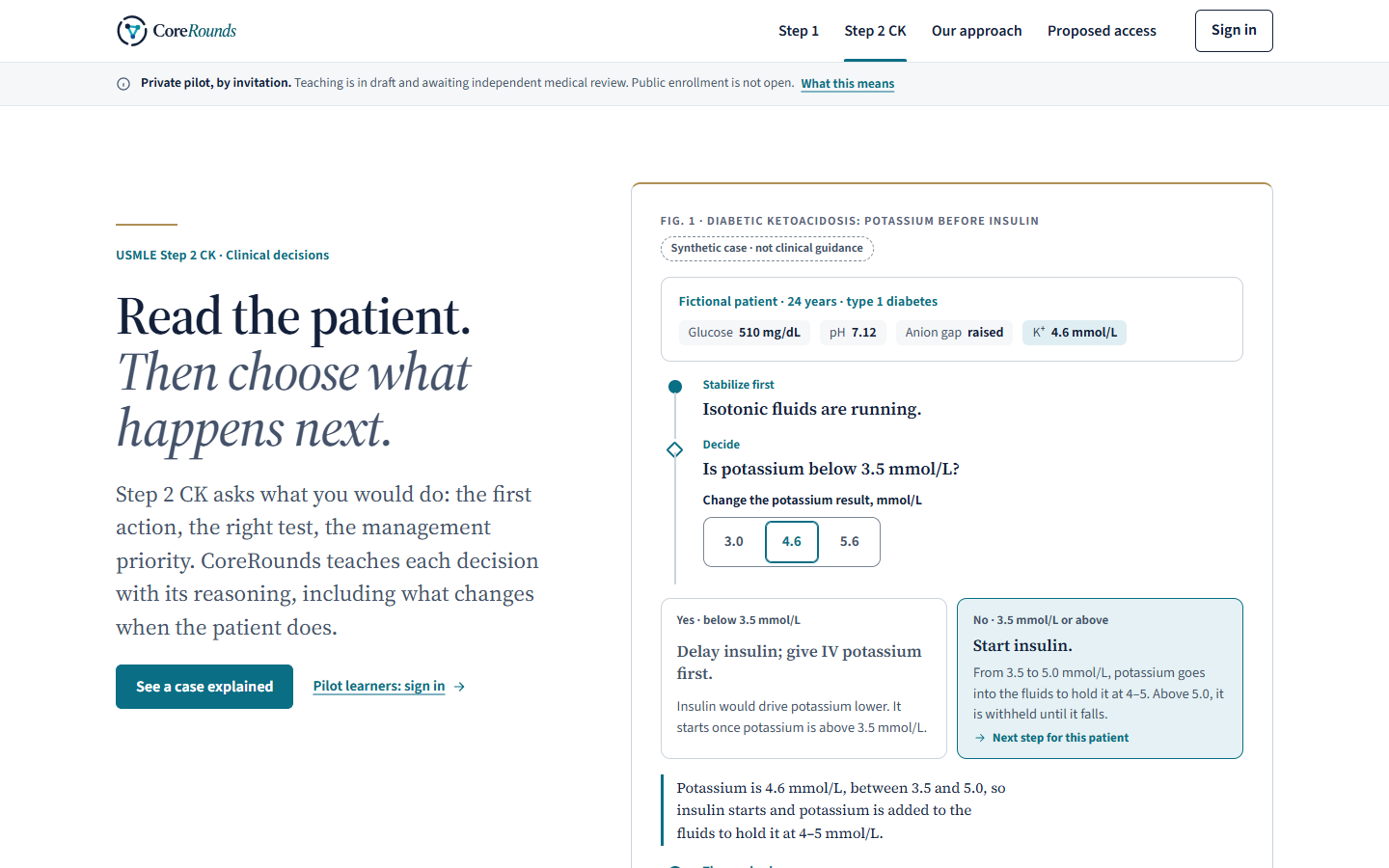
CoreRounds keeps the thread. One versioned concept library feeds two teaching pathways, so insulin driving potassium into cells in Step 1 becomes “check potassium before insulin in DKA” in Step 2 CK.
The aim is a complete primary learning environment — lessons, original questions, visual teaching, revision, planning, notes and progress — built to be exceptionally understandable.
The learner journey
A round of study, from plan to progress.
Six steps that repeat every day — each one honest about what it can and can’t tell you.
Profile
Choose your Step, your target date and the time you really have each day.
Today
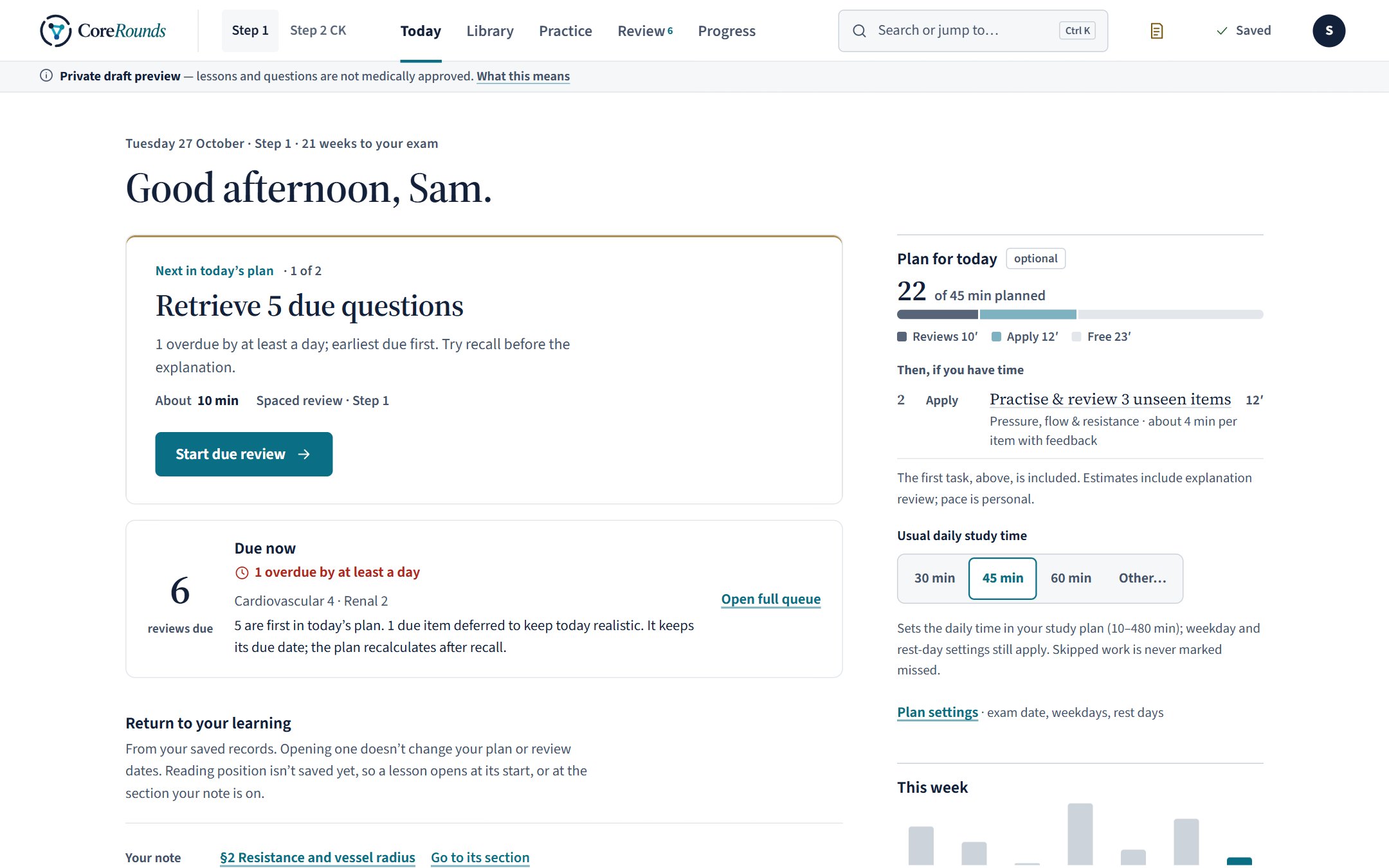
A suggested lesson, a bounded set of due reviews and practice with time left for explanations.
Learn
Search lessons, glossary terms and your own notes; study in Learn, Apply and Rapid review views.
Practice
Tutor feedback after each answer, with every distractor explained and linked to the exact lesson section.
Review
Spaced retrieval at 1, 3, 7, 14 and 30 days; a lapse resets to one day.
Progress
Coverage, first attempts, repeat attempts and delayed recall reported separately — small samples are labelled as such.
Inside the product
Three layers in every lesson.
Select any screen to view it full size.
Learn
Start with the mechanism
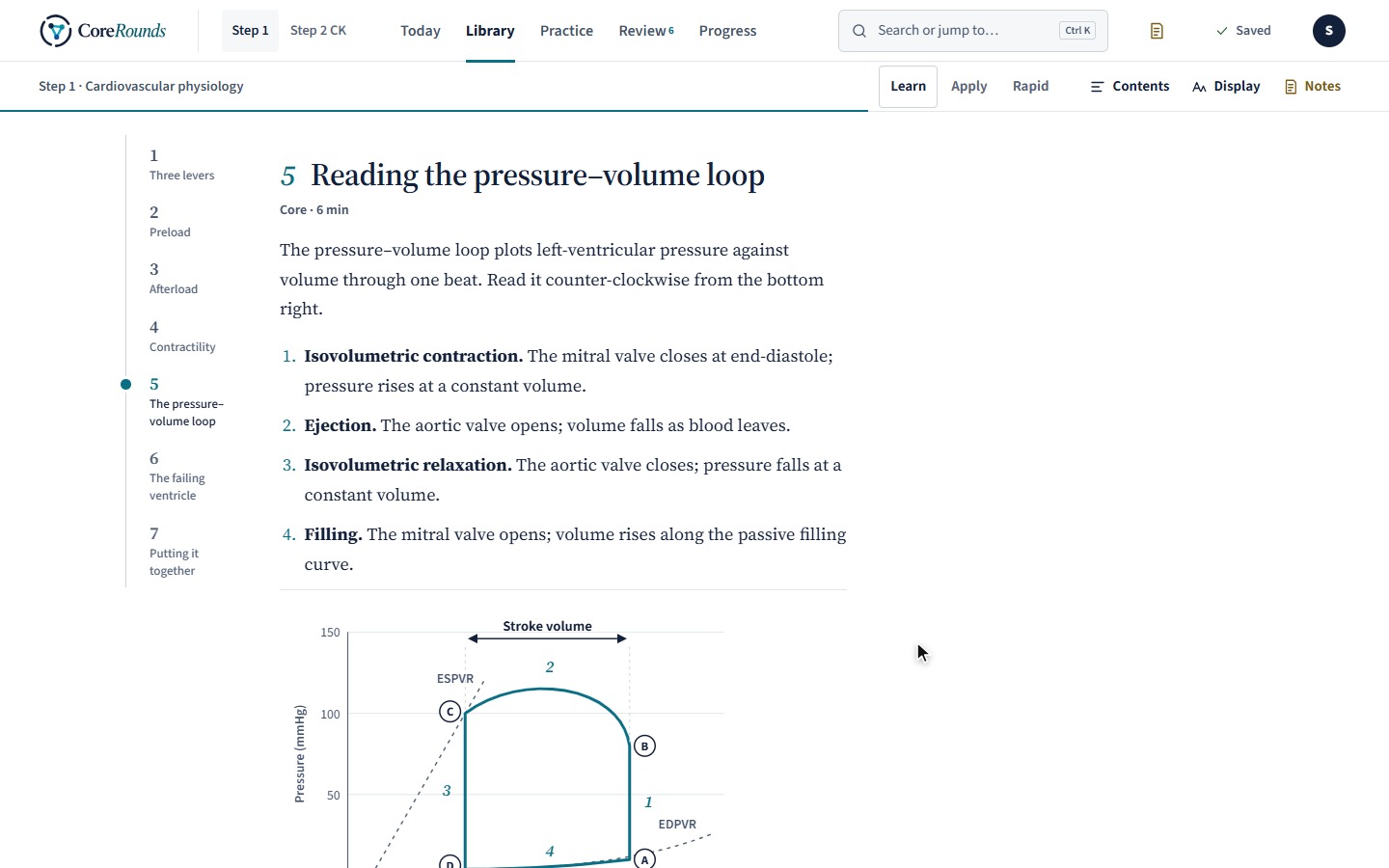
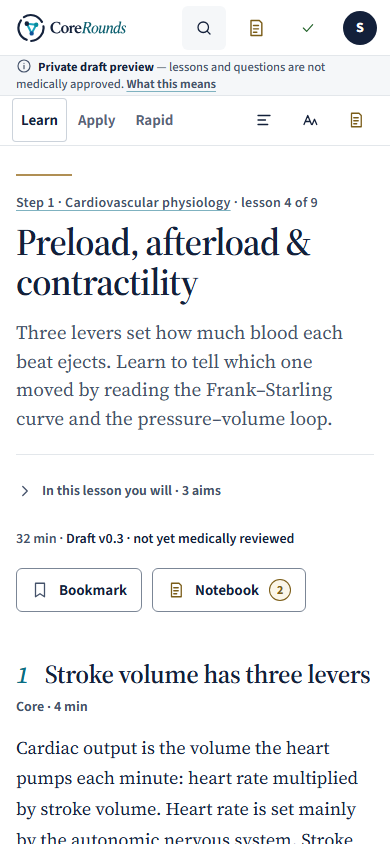
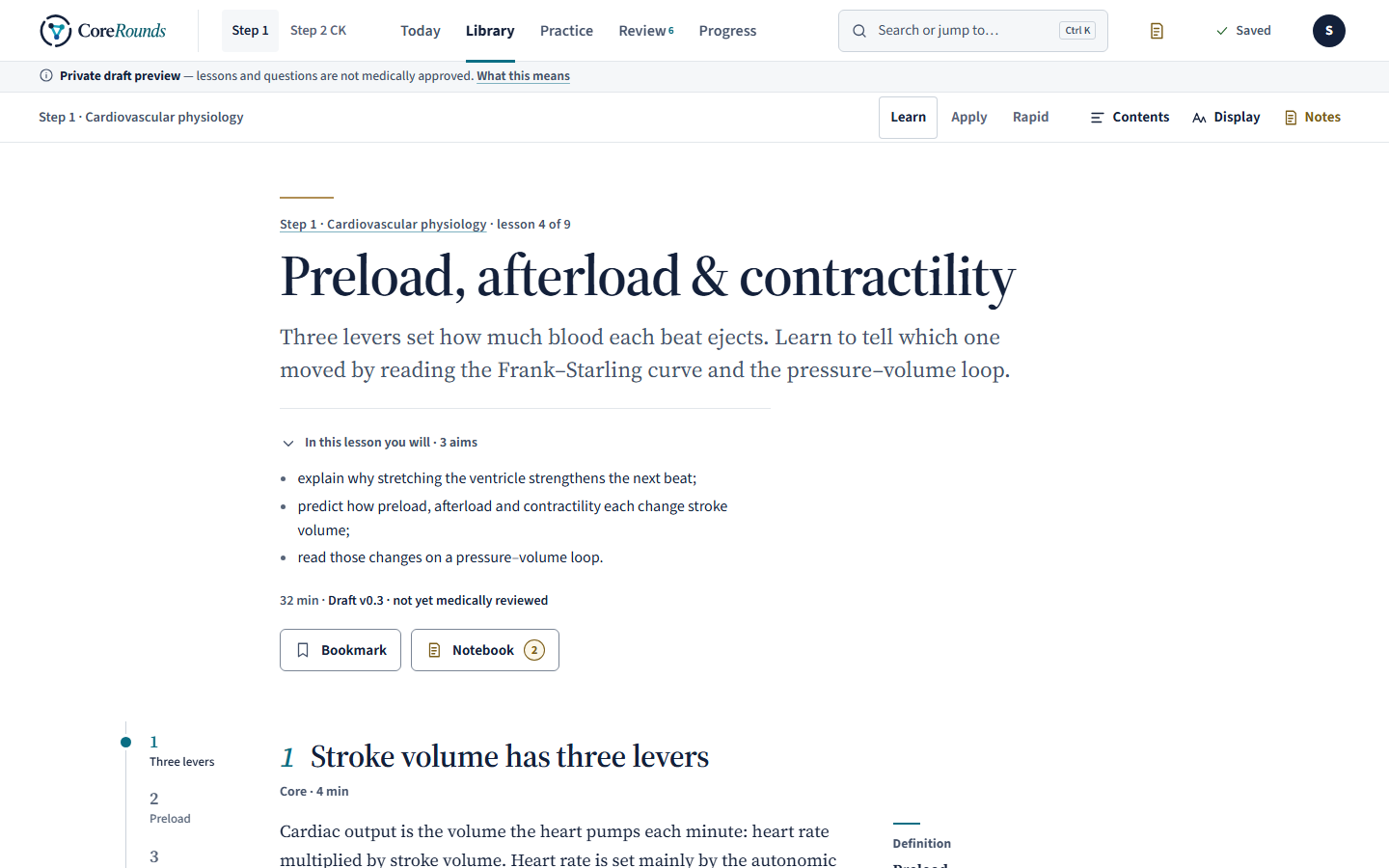
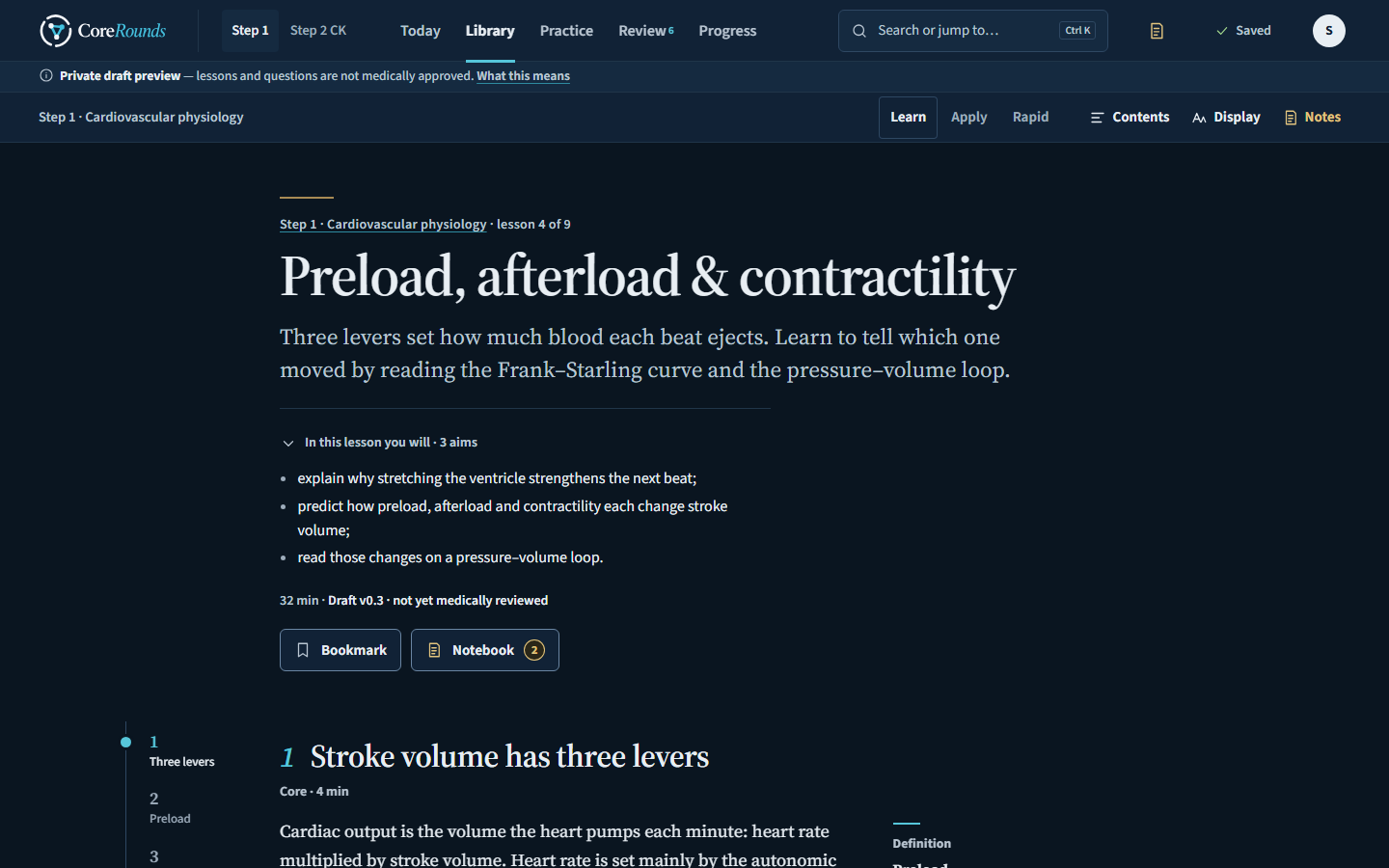
Every lesson opens with what you will be able to do, then teaches the mechanism in short numbered sections with purposeful diagrams and margin definitions.
Apply
Commit, then see the reasoning
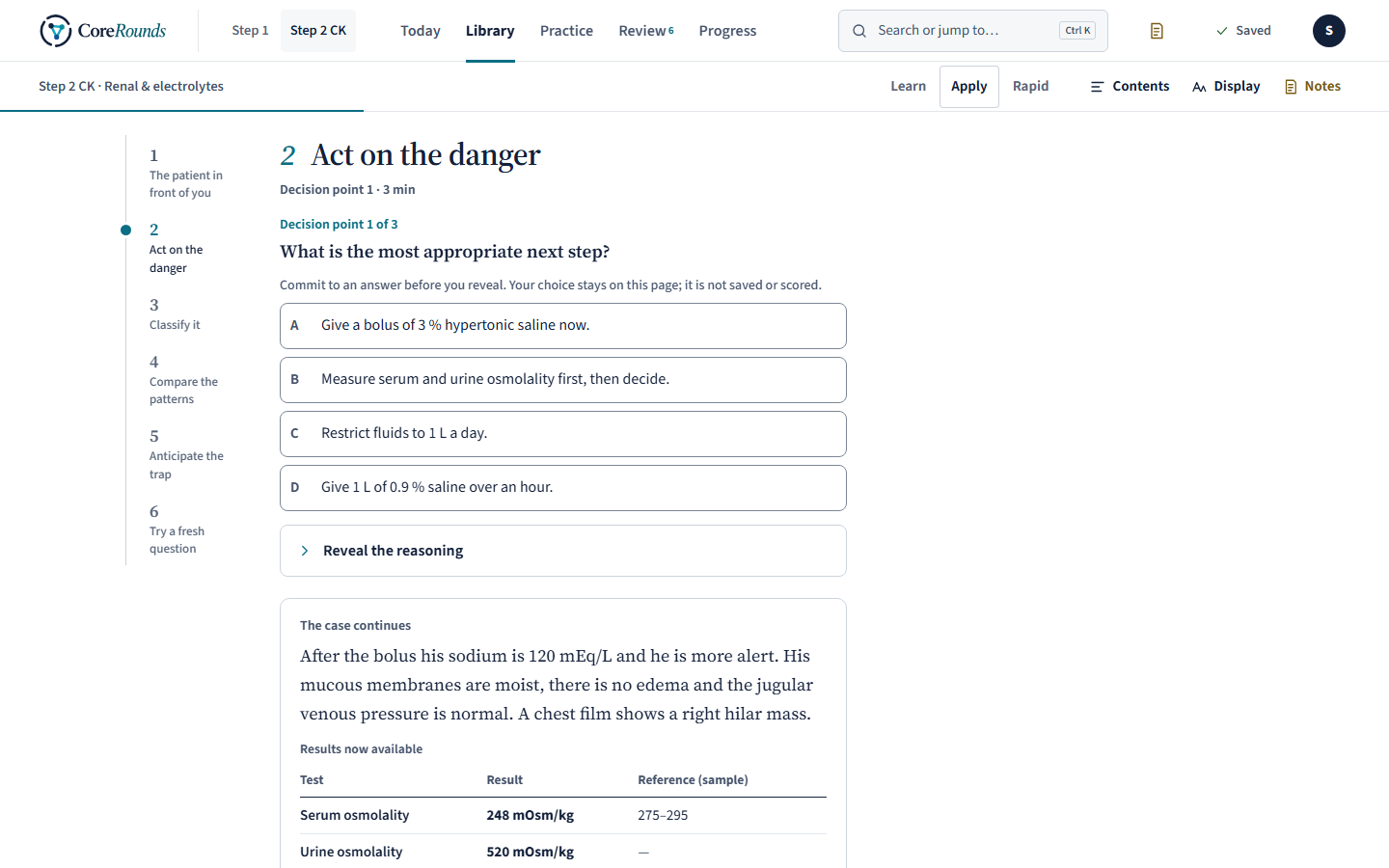
Decision points put the concept to work: commit to an answer before the reasoning is revealed, then follow how the case continues.
Rapid review
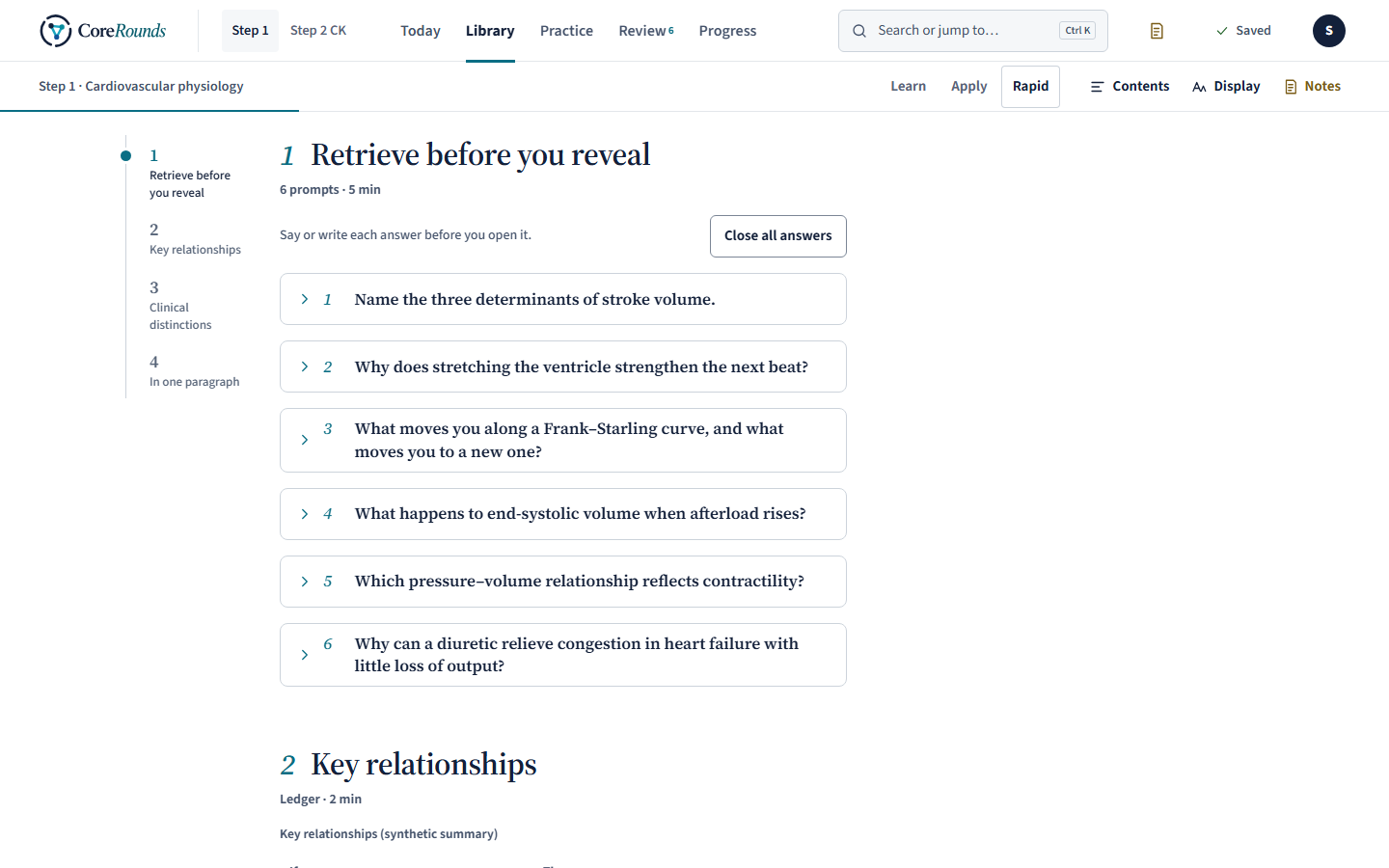
Retrieve before you reveal
Key relationships and common confusions as retrieval prompts — always linked back to the full lesson, never a replacement for it.
Design & build
Honest progress, robust by design.
CoreRounds is built with React 19, TypeScript and Vite, with Supabase for authentication and optional cloud saving. Teaching is served only to verified learners with an active grant, so no lesson or answer library ships in the public build.
The learning record is designed to be trustworthy: submitted answers are immutable, timed sessions survive refreshes, and progress never claims delayed recall from an early preview.
Status: CoreRounds is a private pilot by invitation. Teaching is in draft and awaiting independent medical review; public enrolment is not open.